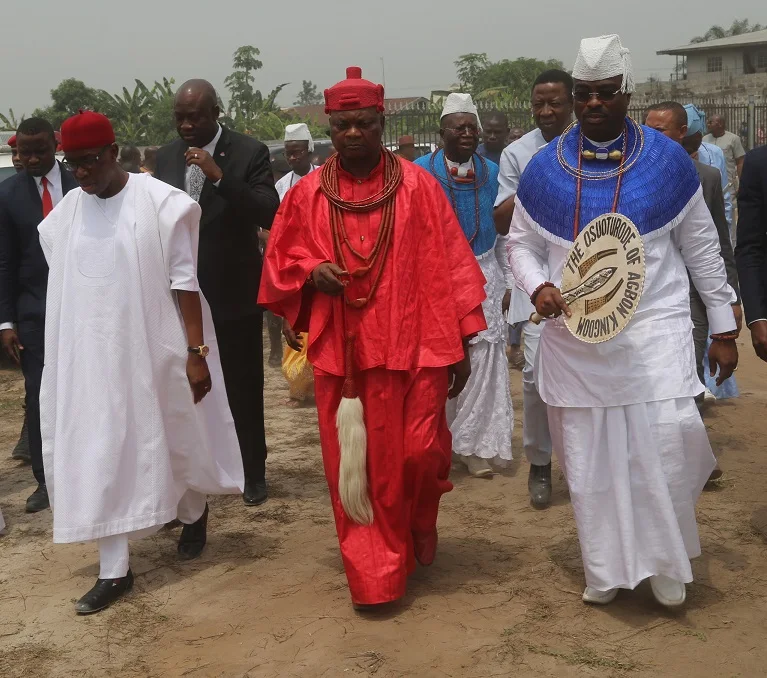
Agbon is one of the major traditional subdivisions of the Urhobo people, in the Ethiope East Local Government Area of Delta State, covering roughly 375 square kilometres.
Oral tradition recorded in encyclopedic and community sources holds that the founders of Agbon migrated over time, moving through the Kwale and Isoko areas and down through Olomu and Ughelli, before founding Otorho r' Agbon, the settlement now known as Isiokolo, which became the recognised ancestral seat of leadership for the kingdom.
Agbon is frequently cited as one of the more populous Urhobo cultural units, often described as among the largest after Okpe. Its prominence is reflected in the standing of its monarchs within Delta State's traditional and political life.
Isiokolo serves a dual role. It is the administrative headquarters of the Ethiope East Local Government Area, and it is the traditional headquarters of the Agbon Kingdom.
The town houses the palace of the Ovie of Agbon, where the monarch resides and conducts the affairs of the kingdom. Isiokolo is the ceremonial and administrative centre of Agbon, the site of major kingdom events, peace accords and engagements with government and institutions.
Beyond Isiokolo, the kingdom is consistently described as comprising six major divisions, alongside more than forty towns and villages.
Reported in birth order as the eldest of the Agbon divisions; home of the Edjenu masquerade tradition.
A major Agbon town, long associated with the kingdom's farming and oil-bearing country.
A historic Agbon community well known across Delta State.
One of the six divisions, also rendered Orhoakpo in some accounts.
An Agbon division and the ancestral home of several distinguished sons of the kingdom.
Reported as the youngest of the six divisions of Agbon.
The kingdom's economy is associated with palm produce, rubber plantations and crude oil. The exact roster and spelling of constituent communities varies across sources and is best confirmed with the Agbon Traditional Council.
A long-established monarchy that has anchored the kingdom across generations.
His Royal Majesty Mike (Michael) Omeru reigns under the royal name Ogurimerime Ukori I, crowned Ovie of Agbon in February 2013. A businessman before ascending the throne, his reign has been publicly characterised by Delta State officials as a period of peace, unity and development. He has been associated with the donation of 123.2 hectares at Isiokolo to the Federal University of Petroleum Resources, Effurun, for a resource centre, and bears the national honour of Commander of the Order of the Niger (CON).
The late HRM Chamberlain Oyibocha Orovwuje, who bore the royal name Ogurimerime I, reigned as Ovie of Agbon from 1958 until his passing in 2012, a tenure of about 54 years that ranked him among the longest-reigning monarchs in Delta State. He served as a former chairman of the Delta State Council of Traditional Rulers, lending Agbon a steady and respected voice in the affairs of the state.
Agbon Day is the annual cultural celebration that gathers the people of the kingdom, their sub-clans, traditional rulers led by the Ovie, and invited guests, to showcase Urhobo dance and masquerade, advance community causes and honour distinguished sons and daughters.
The celebration is kept in two related forms: a homeland anniversary observance at Isiokolo, and a diaspora Agbon Day organised by the Agbon Kingdom Union in the United Kingdom. A homeland anniversary at Isiokolo in February 2017 drew guests including the then Delta State Governor and the President-General of the Urhobo Progress Union. The 2025 diaspora edition, held near London, gathered some four hundred people, with each of the six sub-clans presenting dances of their heritage.
Beyond Agbon Day itself, the kingdom is home to the Edjenu masquerade festival of the Okpara people, whose great masquerade is sometimes described as a "ladder to heaven" and is staged only at long intervals, rooted in Urhobo traditional religion.
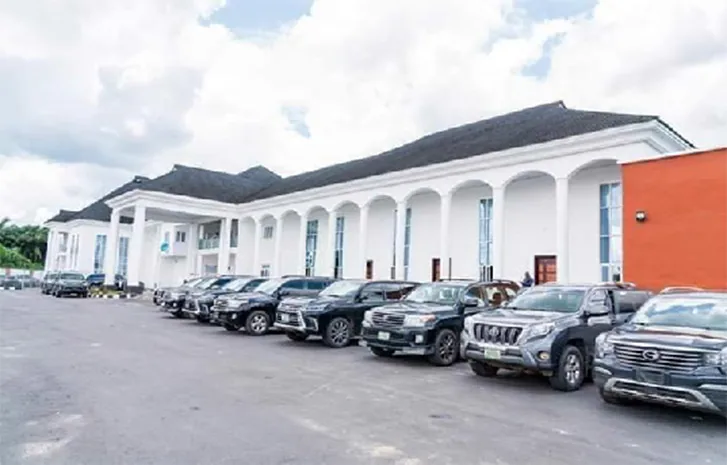
Explore the wider Urhobo story, the figures who shaped our nation, and a timeline of our history.
This profile of Agbon Kingdom is compiled from public sources including Wikipedia (Agbon Kingdom, Isiokolo, Chamberlain Orovwuje), Urhobo Today, Superior Radio and Television, The Guardian, Vanguard and the profile of Agbon by Chief Imo Otite hosted at Waado.org. Founding dates rest on oral tradition and are given as approximate; names, spellings and the roster of communities are best confirmed with the Agbon Traditional Council. Corrections from the community are welcome through our Contact page.