Preserving Culture
Keeping Urhobo heritage, language and custom alive among members and their children in Lagos.
The story of a people of the western Niger Delta: our origins and language, our kingdoms and kings, our faith, festivals and the union that binds us as one.
The Urhobo are one of the principal peoples of Nigeria's Niger Delta, settled chiefly in Delta State, with communities reaching into Bayelsa and Edo.
Urhoboland is a riverine and forest country, and much of our life, faith and folklore is bound up with rivers, creeks, farming and fishing. We speak Urhobo, a Southwestern Edoid language of the Niger-Congo family, and we are organised not as a single state but as a federation of largely self-governing kingdoms, each anchored in shared ancestry and, where adopted, a traditional ruler.
Urhobo society is patrilineal and built around the extended family compound, the ward and the kingdom, with councils of elders and age-grades carrying authority. In the modern era the Urhobo Progress Union has served as the rallying voice of the nation, under the enduring ethos that "Urhobo is one."
Seven threads of the Urhobo story. Follow any one.
Origins, migration and the Urhobo language.
The Ovie, the king's council and the royal titles.
Faith, marriage, music, dress and custom.
Agbon Day and the festivals of Urhoboland.
Founders, statesmen and achievers of Urhobo heritage.
Photographs and video of our people and events.
The narratives carried down by word of mouth.
A people of the western Niger Delta, with origins kept in oral tradition and a tongue carried across many kingdoms.
The Urhobo are an indigenous people of Delta State, organised into many largely self-governing kingdoms and bound by a common language, a Southwestern Edoid tongue of about 1.1 million speakers. Their origins are remembered in oral tradition, most often as a migration from the Benin area in the time of the Ogiso, with each community keeping its own founding story.
Urhoboland is a federation of autonomous kingdoms, each headed by a traditional ruler and guided by titled chiefs and councils of elders.
At the head of each kingdom stands the Ovie, or a royal title of the kingdom's own, governing with the Ovie-in-Council of titled chiefs; at the level of town and village the eldest man, the Okpako Orere, presides over an older, gerontocratic order of elders. The royal titles, the king's council, the contested count of twenty-two to twenty-four kingdoms, and the monarchs reigning today are told in full on their own page.
Faith, marriage, festival, music and dress weave the Urhobo worldview into daily life.
Traditional belief centres on Oghene, the Supreme Creator associated with the sky, recognised alongside divinities and the veneration of ancestors (Erivwin). The cosmology distinguishes the spirit realm (Erivwin), the individual soul (Erhi) and the body (Ugboma). The indigenous Igbe movement also arose among the Urhobo, and today the large majority of Urhobo identify as Christian, while ancestral honour remains culturally significant.
Marriage is understood as a union of two families, from courtship through formal introduction to the ceremony. A hallmark of Urhobo marriage is a deliberately low, symbolic bride price, commonly cited as 120 Naira, with a portion returned to the couple to grow over the marriage. The custom expresses a cherished principle: that a daughter is honoured, and is never for sale.
Annual water and fishing festivals renew community ties and assert cosmological order through masquerade, swimming contests, processions and offerings. The Ohworu festival at Evwreni displays the Ohworhu water spirit and the great Eravwe Oganga masquerade, reflecting a people whose life and lore are bound to rivers, creeks and lagoons.
The celebrated Udje tradition sets rival quarters to compose and perform satirical songs about one another, a poetic art of correction and wit documented by scholars such as Tanure Ojaide and G. G. Darah. In dress, George-fabric wrappers, the Eru hat for men, the Aniku and Oseba wrappers and Ewu blouse for women, and coral beads at neck, wrist and waist signal status and ceremonial readiness.
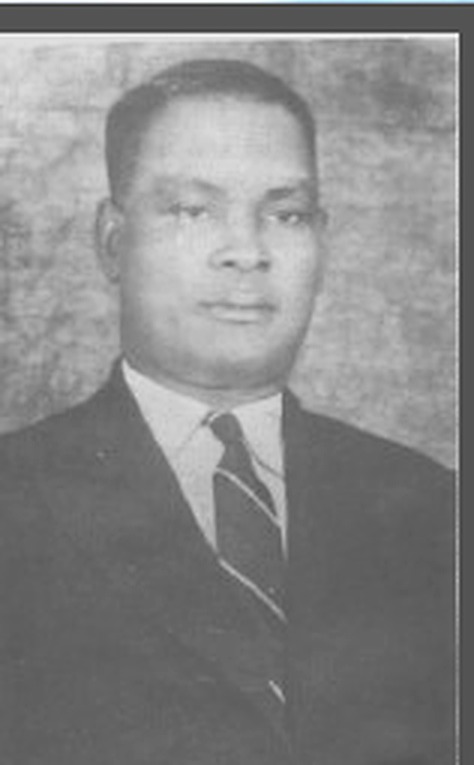
The principal modern voice of the Urhobo nation is the Urhobo Progress Union (UPU). It was founded in 1931 in Warri, first as the Urhobo Brotherly Society, and took the name Urhobo Progress Union during the 1930s. It is widely regarded as one of the oldest surviving socio-cultural organisations in Nigeria.
The UPU drew scattered clan associations into a single ethnic voice. It championed Western education, founding Urhobo College in 1948 and sponsoring overseas scholarships, and it campaigned for the recognition of Urhobo kingships through the twentieth century. Chief Mukoro Mowoe, who became President-General in 1937, is remembered as its towering early leader. Its motto, once "Higher Aims, Higher Thoughts," became "Unity is Strength" in 1956.
The Urhobo Social Club Lagos is proud to stand in affiliation with the UPU, carrying its spirit of unity and progress into the life of the Urhobo diaspora.
Much of Urhobo history lives not in archives but in memory: in the migration narratives each kingdom keeps of its own founding, in the satirical Udje songs of rival quarters, and in the folktales and proverbs handed from elder to child. These accounts differ from one community to another, and that is part of their richness.
This collection is growing. If you hold a story, a recording or a memory worth preserving, we would be honoured to receive it through our Contact page.
A cultural institution carrying Urhobo identity into the life of Lagos and the diaspora.
Keeping Urhobo heritage, language and custom alive among members and their children in Lagos.
Drawing Urhobo people from every kingdom and clan together, in affiliation with the Urhobo Progress Union.
The Mukoro Mowoe Memorial Lecture Series and scholarships for indigent Urhobo students.
Marking Urhobo festivals, thanksgivings and milestones together as a community.
Encouraging younger generations to know their roots and take part in cultural life.
Welfare, interventions and the building of Urhobo House as a permanent cultural home.
From deep antiquity through the founding of the club, on one dated timeline.
The Urhobo Social Club Lagos preserves our culture and invests in our people. Join us, or support the building of Urhobo House.
This heritage summary is compiled from public encyclopedic, scholarly and Nigerian community sources, including Encyclopaedia Britannica, Wikipedia, the Urhobo Historical Society and the Digital Library and Museum of Urhobo History and Culture, the writings of Peter Ekeh and Tanure Ojaide, and Urhobo Today. Deep-history dates rest on oral tradition and are given as approximate. Corrections and contributions from the community are warmly welcomed through our Contact page.